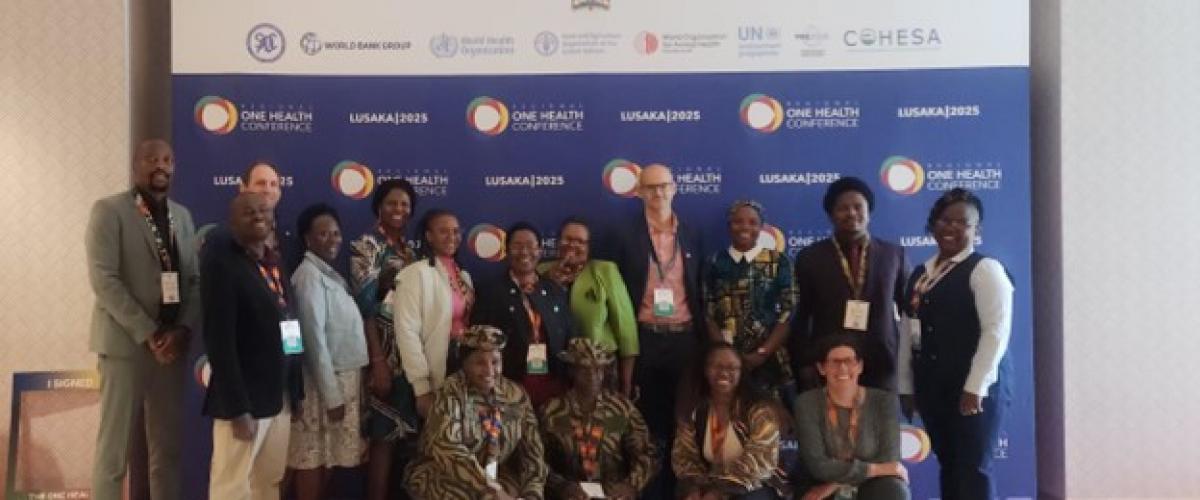
Innovations that strengthen coordinated national and regional surveillance and response to human and animal health threats took center stage at a recent eastern and southern Africa One Health conference in Lusaka, Zambia. Participants showcased solutions that are transforming how the region is preventing, detecting, and responding to shared health threats such as zoonoses, antimicrobial resistance, and discussed how policy frameworks can scale these innovations in partnership with governments, the private sector and funders.
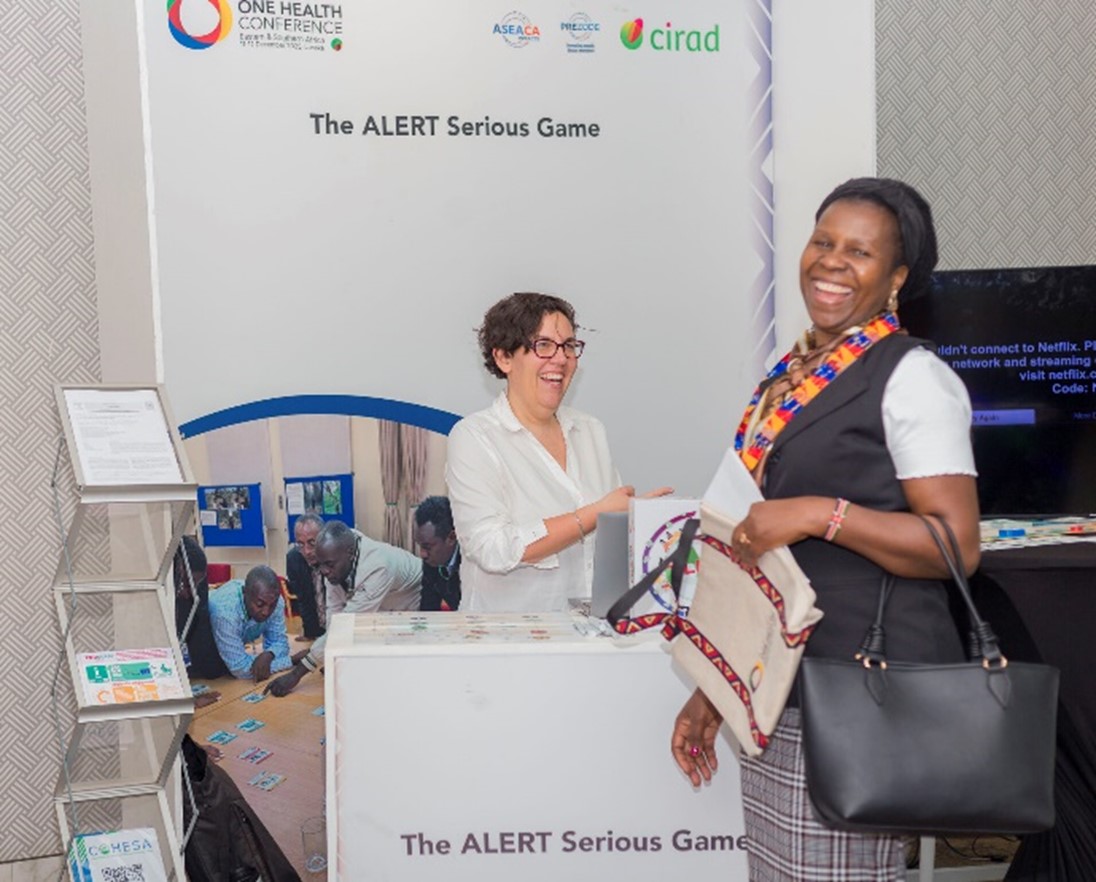
One of the featured innovations was the “Alert serious game”, an interactive card game that simulates responses to potential One Health hazards at the human-wildlife interface following unexplained animal deaths. From a farmer’s initial observation to regional animal health reporting, the game reinforces risk awareness and rapid response capabilities.
With up to 75% of emerging infectious diseases originating in animals, the event reinforced the need for a One Health approach in a region where climate variability, agriculture, and high population mobility amplify transboundary risks. The structure of the conference reflected this priority, combining high-level presentations with focused group discussions and an innovations’ marketplace of tools that strengthen preparedness and sustainability. The innovations’ marketplace was hosted by the Capacitating One Health in eastern and southern Africa (COHESA) project.
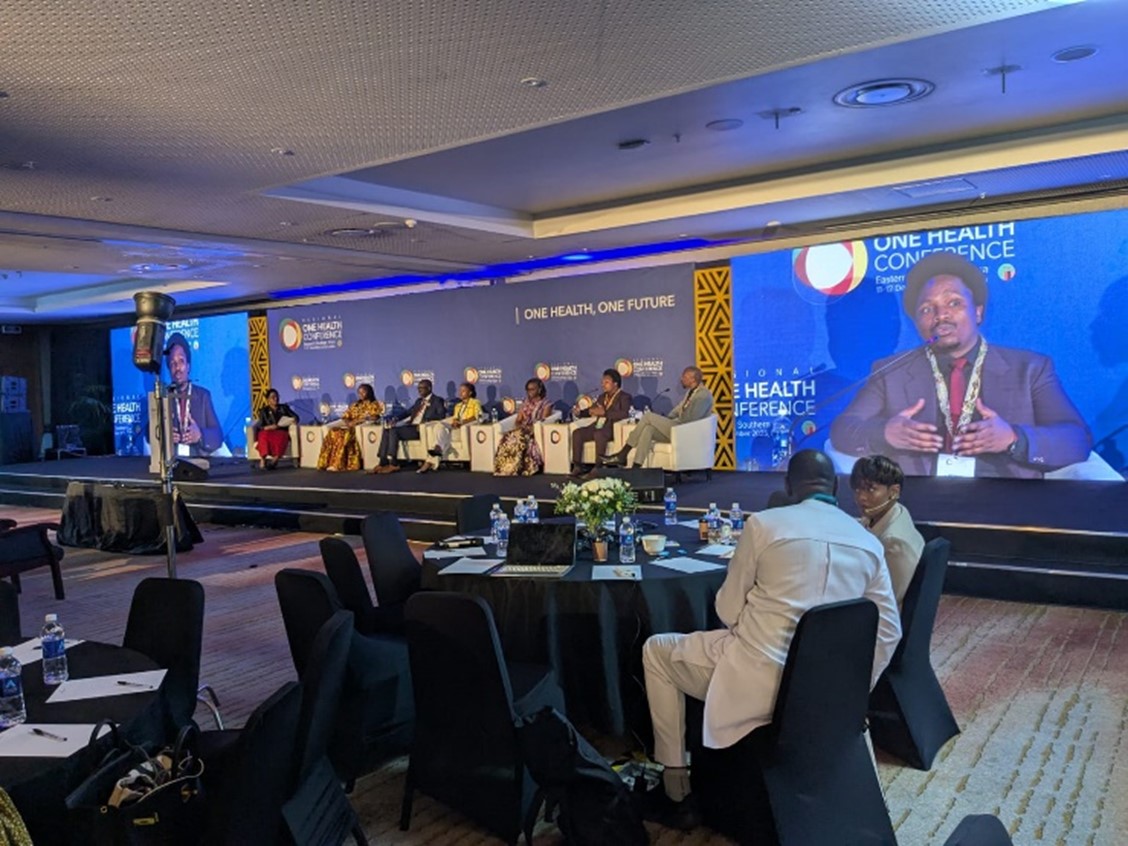
The session curated home-grown solutions developed and tested under real-world conditions by country partners. These innovations, several of them supported by project funding, demonstrated strong potential for replication and integration into national and regional systems.
COHESA hosted the One Health innovations marketplace, showcasing home grown innovative solutions to One Health threats experienced in Eastern and Southern Africa. Several of the solutions presented were developed by project country partners, supported by COHESA.
COHESA also showcased an awareness video highlighting the “Communicating One Health through science, art and society (CASCOH),” research to action project in Massingir District, Mozambique. The project uses participatory communication tools to improve understanding of zoonotic diseases among communities living within and adjacent to the Limpompo National Park.
The marketplace also featured the International Livestock Research Institute’s Health of Environments, Animals and Livelihoods (HEAL) unit’s approach to co-delivery of human, animal and rangeland health services. By incorporating mobile service delivery, the model expands access for pastoral and mobile populations and presents a scalable, cost-efficient approach for governments and development partners seeking to maximize impact across underserved regions.
Collectively, these innovations illustrate how targeted One Health solutions can strengthen cross-border health security and deliver sustainable returns. Building on engagements with stakeholders during the conference, the COHESA network will contribute to the review of the SADC regional One Health roadmap, supporting the integration of proven, scalable innovations into policy, financing, and implementation frameworks.
The conference was organized by the World Bank, the Southern African Development Community (SADC), COHESA and the Quadripartite organizations in Lusaka, Zambia on 11–12 December 2025. It was attended by representatives from government, the private sector, academia, and civil society.
………………………..
About the Quadripartite
The Quadripartite is a formal partnership of four international organizations – the Food and Agriculture Organization of the United Nations (FAO), the United Nations Environment Program; the World Health Organization (WHO) and the World Organization of Animal Health (WOAH) working together to implement a "One Health" approach, integrating human, animal, and environmental health