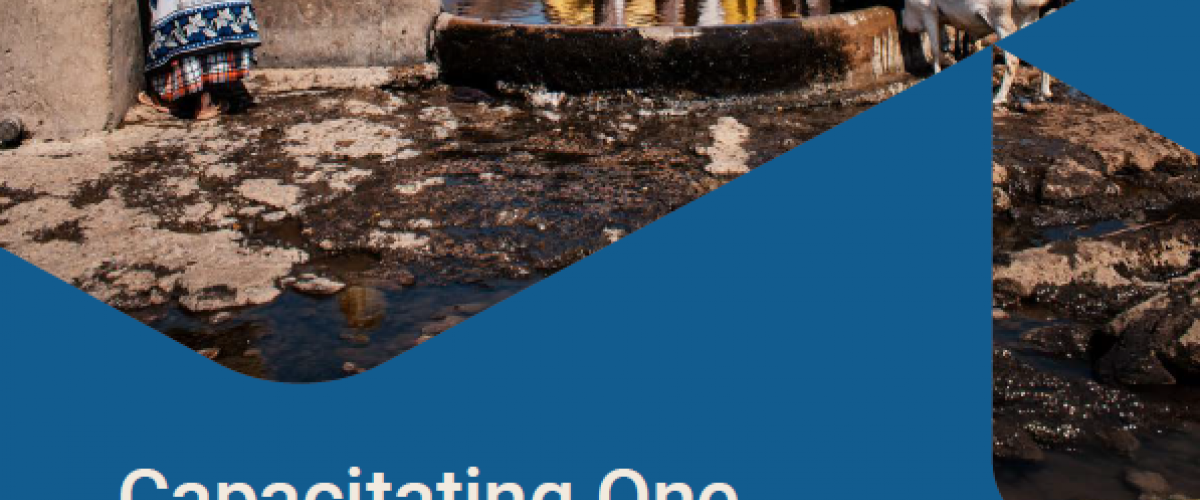
The Capacitating One Health in Eastern and Southern Africa (COHESA) project has released a new report detailing the outcomes of its five-year effort to embed the One Health approach into governance, education, and research across the sub-region. The eight-page document highlights key achievements in institutionalizing and operationalizing One Health across 12 countries.
Running from 2021 to 2026, COHESA was funded by the European Union and implemented by the OACPS Research and Innovation Programme. The project operated in Botswana, Ethiopia, Kenya, Malawi, Mozambique, Namibia, Rwanda, Somalia, Tanzania, Uganda, Zambia, and Zimbabwe.
Highlights from the Project
Governance:
Nine countries developed new or updated national One Health strategies during the project period. Zambia, Zimbabwe, Namibia, and Mozambique now have active strategies for the first time, while Kenya extended the approach to sub-national level.
Zambia credited its 2023 strategy with enabling a faster, better-coordinated response to anthrax, cholera, and aflatoxin outbreaks later that year.
Education:
One Health content was introduced into higher education across all 12 countries, and into school curricula in seven. In Uganda, 1,500 students and 100 teachers became One Health ambassadors, running school clubs, gardens, and small animal farms. In Somalia, a new bilingual facilitator guide helped reach over 9,000 students. Beyond the classroom, more than 1,400 professionals from 21 countries completed COHESA's online One Health training.
Community solutions:
The project supported 14 locally led projects tackling country-specific challenges — from a plastic-to-energy waste initiative in Lupane, Zimbabwe, to community gardening and food-security work in Namibia, to participatory theatre addressing zoonotic disease awareness near Mozambique's Limpopo National Park.
Looking ahead
With the project drawing to a close, COHESA partners have launched a co-design process for COHESAplus, a successor network intended to sustain regional One Health collaboration and advance an African-led, community-owned approach to health beyond the life of the project.
The Capacitating One Health in Eastern and Southern Africa (COHESA) project has released a new report detailing the outcomes of its five-year effort to embed the One Health approach into governance, education, and research across the sub-region. The eight-page document highlights key achievements in institutionalising and operationalising One Health across 12 countries.
Running from 2021 to 2026, COHESA was funded by the European Union and implemented by the OACPS Research and Innovation Programme. The project operated in Botswana, Ethiopia, Kenya, Malawi, Mozambique, Namibia, Rwanda, Somalia, Tanzania, Uganda, Zambia, and Zimbabwe.
Highlights from the Project
Governance: Nine countries developed new or updated national One Health strategies during the project period. Zambia, Zimbabwe, Namibia, and Mozambique now have active strategies for the first time, while Kenya extended the approach to sub-national level.
Zambia credited its 2023 strategy with enabling a faster, better-coordinated response to anthrax, cholera, and aflatoxin outbreaks later that year.
Education: One Health content was introduced into higher education across all 12 countries, and into school curricula in seven. In Uganda, 1,500 students and 100 teachers became One Health ambassadors, running school clubs, gardens, and small animal farms. In Somalia, a new bilingual facilitator guide helped reach over 9,000 students. Beyond the classroom, more than 1,400 professionals from 21 countries completed COHESA's online One Health training.
Community solutions: The project supported 14 locally led projects tackling country-specific challenges — from a plastic-to-energy waste initiative in Lupane, Zimbabwe, to community gardening and food-security work in Namibia, to participatory theatre addressing zoonotic disease awareness near Mozambique's Limpopo National Park.
Looking ahead
With the project drawing to a close, COHESA partners have launched a co-design process for COHESAplus, a successor network intended to sustain regional One Health collaboration and advance an African-led, community-owned approach to health beyond the life of the project.